“Generative AI in 2025: Beyond ChatGPT and MidJourney”
: Introduction – The Rise of Generative AI
Generative AI has moved from being a futuristic concept to a practical tool powering daily life. What started with platforms like ChatGPT for text and Mid Journey for images has now evolved into a massive ecosystem. In 2025, generative AI is no longer just about writing articles or creating art—it’s transforming industries, reshaping creativity, and even influencing how we think about human potential. The question today is not whether AI can generate content, but how far its impact can reach.
Step 1: From Text and Images to Multi-modal AI
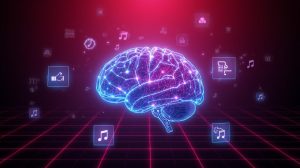
In the early years, generative AI was divided into specific domains—text, image, audio, or video. Now, multi-modal AI models dominate. These advanced systems can take a single input and produce multiple forms of output. For example, a simple voice command can generate a 3D design, an instructional video, or a fully functional website. This shift is breaking down the barriers between different forms of content and allowing creators to work across mediums effortlessly.
Step 2: Generative AI in Film, Music, and Entertainment
Hollywood, gaming studios, and musicians are embracing AI as a creative partner. Filmmakers use generative AI to draft scripts, create virtual sets, and even design lifelike characters without heavy CGI costs. Musicians are experimenting with AI co-composers that generate melodies or lyrics based on mood. In gaming, dynamic story lines powered by AI ensure that no two players experience the same adventure. By 2025, generative AI is no longer just a support tool—it’s becoming an essential collaborator in the creative process.

Step 3: Generative AI in Business and Productivity
Businesses are turning to generative AI not only for marketing content but also for innovation. Companies are using AI to generate product designs, prototype new ideas, and create marketing campaigns in minutes. AI assistants can now draft presentations, write business strategies, and even simulate customer behaviour to predict future trends. For startups and small businesses, this means competing with big corporations is more possible than ever before.
Step 4: Personalised at Scale
One of the most powerful aspects of generative AI in 2025 is its ability to personalise at an unprecedented level. Imagine a learning platform where every student gets a completely customised textbook, tailored to their pace and interests. Or an e-commerce website that shows you product descriptions written in your tone of voice. Personalised has gone beyond recommendations—now, AI generates unique experiences for every individual, making digital interactions feel deeply human.

Step 5: The Ethical and Legal Questions
With power comes responsibility. As generative AI becomes more advanced, the challenges grow. Who owns AI-generated content—the creator, the AI tool, or the company that built it? How do we ensure AI doesn’t reinforce biases or spread misinformation at scale? Deepfake technology, for instance, is becoming harder to distinguish from reality, raising concerns about trust and authenticity. Policymakers and tech leaders are working to create frameworks that balance innovation with ethics.
Step 6: Generative AI and Human Creativity
A big debate in 2025 is whether AI will replace human creativity or enhance it. The reality is that generative AI works best as a collaborator, not a competitor. Artists, writers, and professionals who embrace AI as a partner are discovering new forms of expression and efficiency. Instead of limiting creativity, AI is pushing people to think bigger, experiment more, and create at a scale that was once impossible.

Step 7: The Future Ahead
Looking forward, generative AI is moving toward real-time creativity. Imagine brainstorming with an AI partner who not only suggests ideas but also instantly brings them to life in text, visuals, sound, or code. We are heading into an era where creation is limited only by imagination, not by skill or resources. The boundary between creator and consumer will blur, as anyone can use AI to produce professional-quality work.
: Conclusion – Beyond ChatGPT and MidJourney
Generative AI in 2025 is far more than text prompts and image generation. It’s an engine of creativity, personalised, and innovation. From business to entertainment to education, its influence is reshaping how humans interact with technology and with each other. While challenges around ethics and authenticity remain, one thing is certain: we are entering an era where human imagination, amplified by AI, can achieve the extraordinary. The future is not about replacing people—it’s about unlocking what humans and AI can create together.