“AI for Healthcare: How Smart Tech is Saving Lives”
— Introduction
Artificial Intelligence is not longer a futuristic headline — it’s actively reshaping healthcare today. From speeding up diagnosis to tailoring treatments and keeping patients safe at home, AI systems are helping clinicians do more, faster, and often more accurately. This post breaks down seven practical ways AI is saving lives and improving care delivery, using plain language and real-world examples you can relate to. Read this as a short guide to the high-impact areas where smart tech is already making a measurable difference — and what clinicians, patients, and health leaders should watch next.
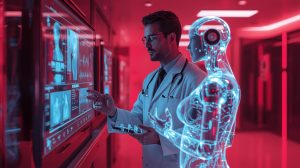
Step 1 — Smarter, faster diagnostics
AI models analyse medical images and clinical data at scale, spotting patterns that humans can miss. In radiology and pathology, machine learning helps detect cancers, fractures, and anomalies earlier by highlighting suspicious areas for clinicians to review. Faster triage means patients with urgent conditions get prioritised, reducing time-to-treatment. Importantly, these tools don’t replace doctors — they augment decision-making, reduce fatigue-driven errors, and serve as a second opinion that speeds up workflows in busy hospitals.
Step 2 — Personalised treatment and genomics
AI helps translate complex genomic and clinical data into individualised care plans. Algorithms can predict which treatments a patient is most likely to respond to based on genetic markers, prior outcomes, and risk factors. That means fewer trial-and-error prescriptions, lower side-effect risks, and more efficient use of expensive therapies. In oncology and rare disease care, this precision approach can be life-changing, enabling clinicians to match patients with targeted drugs or clinical trials that offer the best chance of success.

Step 3 — Remote monitoring and early intervention
Wearable, sensors, and smartphone apps feed continuous health data into AI systems that monitor trends in real time. These systems detect early warning signs — irregular heart rhythms, worsening respiratory metrics, or deteriorating blood sugar control — and alert clinicians or caregivers before a crisis occurs. For chronic conditions and post-discharge care, remote monitoring reduces re-hospitalisations, supports aging-in-place, and empowers patients with timely feedback that improves adherence and outcomes.
Step 4 — Clinical decision support and workflow automation
AI-powered tools streamline routine tasks: automated charting, voice-to-text documentation, and intelligent alerts that surface the most relevant patient information. Decision-support engines synthesise lab results, med, and risk scores to recommend next steps or flag dangerous drug interactions. By cutting administrative load, clinicians gain back time for patient care and reduce cognitive overload — which directly improves safety and the likelihood that critical changes in a patient’s condition are noticed.

Step 5 — Accelerating drug discovery and clinical trials
AI speeds up the drug discovery pipeline by predicting molecule behaviour, optimising compound selection, and identifying promising drug-target interactions. In clinical trials, AI can improve patient matching and retention by finding suitable participants faster and predicting dropout risks. These efficiencies reduce development costs and time-to-market for life-saving therapies, meaning patients can access innovative treatments sooner than with traditional methods.
— Conclusion
AI in healthcare is a tool for amplifying human expertise, lowering preventable errors, and making care more personalised and proactive. As regulation, data privacy, and model transparency improve, these technologies will become even safer and more effective. For patients and providers alike, the future looks less like robots replacing clinicians and more like smart collaboration: clinicians focusing on judgement and empathy, while AI handles pattern detection, data synthesis, and time-consuming tasks. That partnership is already saving lives — and it’s only getting started.